The Danish Gambling Authority (DGA) is the gambling watchdog in Denmark and keeps a close watch on illegal gambling sites. The DGA’s website states that gambling activities are illegal in Denmark if they are provided without first obtaining a license from the authority. An online casino licensed in an offshore gambling jurisdiction is, therefore, illegal in Denmark if it targets Danish players. … Read the rest
Foreign tourists in Denmark are spoiled for choice when it comes to sightseeing as the country has so many different options to keep visitors on their feet. You can visit the Copenhagen Zoo, Thy National Park, Egeskov Castle, the Hans Christian Anderson Museum in Odense, Viking Museum, or Kronborg Castle, just a mention a few. Or you can visit online casino uden dansk licens (udenlandske casino = foreign casino in Danish) if you are a foreigner residing outside Denmark.… Read the rest
The labor market in Denmark is well-known for great working conditions and job mobility. But a few sectors are facing skill shortages.
Known for active employment regulation, social welfare systems and high levels of flexibility, these 3 components constitute the Danish employee market’s ‘Flexicurity Model’. This combines features of Scandinavian welfare policies with the market economy.
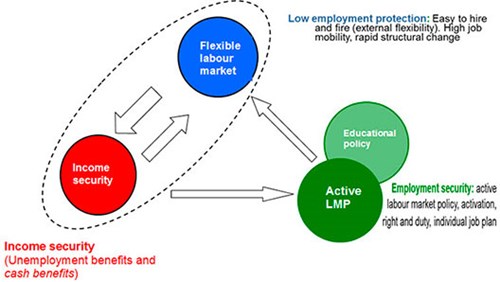
Flexicurity provides job mobility and dynamic labor markets. A big reason why job mobility levels are so high is due to the lack of barriers to switching jobs. For instance, moving on to another job will not affect your holiday time or pension entitlements.
Reduced Labor Market Regulation
You’ll find that Denmark’s labor markets are mostly regulated by various collective agreements made between various social partners.… Read the rest
Are you scouting for jobs in Denmark? Well, there are many ways for landing a spectacular job in this wonderful country.
While applying for jobs here can sometimes get complicated, we’ve got a handy guide that’ll guide you properly through this process.

Denmark society has always been a melting pot of different cultures. Over 25% of all Denmark were born in foreign countries. This means that international recruitment processes over here are pretty straightforward. Although job-hunting here could feel slightly new, you can find solace knowing that Denmark happens to be a country of migrants, with many people who’ve made similar transitions for undertaking short-run jobs & long-term residency, finally progressing to citizenship.… Read the rest
Most of the time, you’ll find your employment contract terms to be made based on several collective agreements. You may also be able to negotiate separate terms for yourself.
In Denmark, employment contract terms are often based on certain collective agreements or overenskomster. These are prepared by key players in Denmark’s labor market, namely employer associations and trade unions.
However, there are several jobs available in Denmark whose employment terms aren’t covered under these collective agreements. When this is the case, employees possess contract freedom that gives them the ability to influence, negotiate and form their contract terms with their employers directly.… Read the rest
The Danish workplace possesses very specific characteristics including an informal communication tone, proactive behavior, flexible & employee-friendly working hours, effective teamwork and a flat hierarchy. This can be quite different from the work culture prevalent back at your home. Understanding this will ease your adjustment to this new and rich workplace culture, helping you enhance your interactions with your colleagues.

The e-learning program from Workindenmark named ‘Make It Work In Denmark’ contains a module named ‘An Introduction to Danish Working Culture’. This will explain how you have to navigate through a new Danish workplace, helping you deal with various unfamiliar situations.… Read the rest
With several countries increasingly utilizing their local talent for the fulfillment of their business requirements, the development & retention of key local talent has become an important priority for companies in Denmark.
Several firms have recognized the fact that the average candidate pool in today’s times is made of a mixture of foreign and local staff members, who have to work & coexist harmoniously for the organization to succeed.

However, this isn’t as easy as it seems.… Read the rest